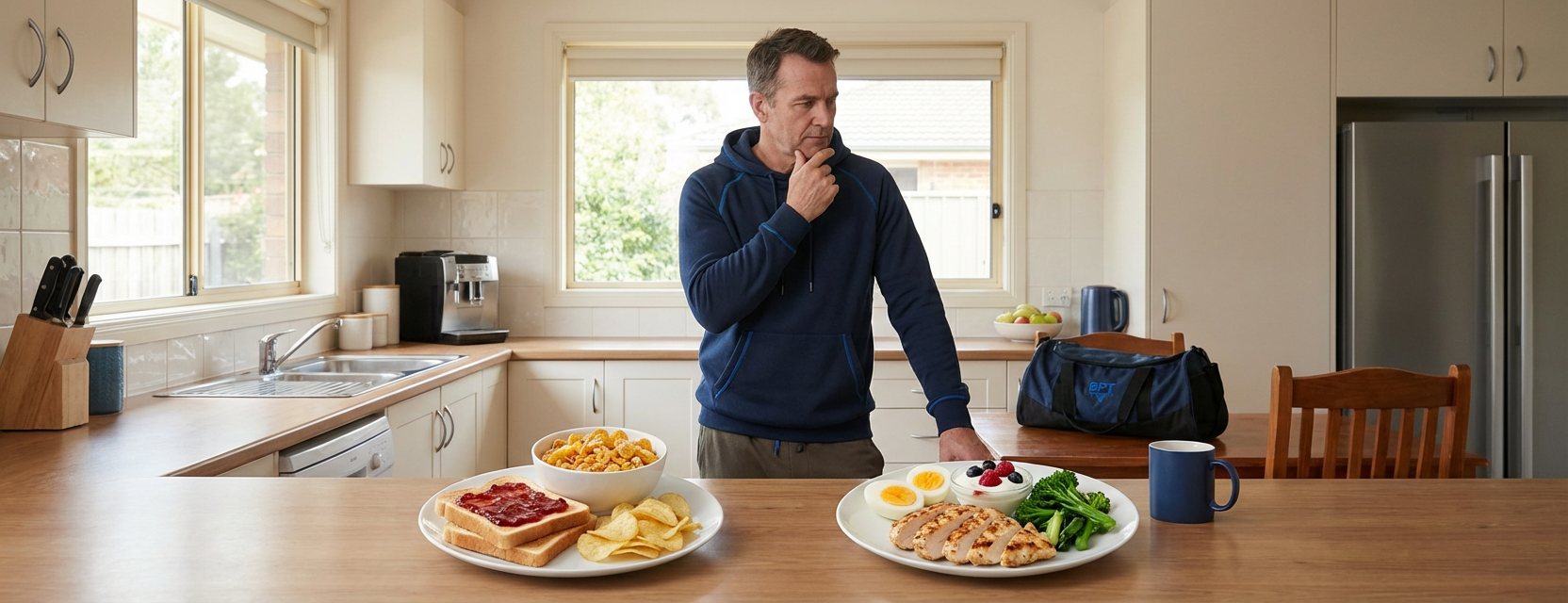
Calories matter. But if you eat 2,000 calories with low protein you will feel hungry, lose muscle and struggle to keep the weight off. Eat the same 2,000 calories with higher protein and you will be less hungry, keep more strength and get better long-term results. That is the practical difference between counting calories and getting high protein fat loss right.
Quick reality check: calories matter, but protein changes the outcome
Yes, energy balance is the foundation. If you eat less energy than you burn you will lose weight. But calories are not neutral. Protein changes how those calories affect your body and your behaviour. Higher protein:
- Increases fullness so you eat less impulsively.
- Protects muscle so you keep metabolic rate and strength.
- Has a higher energy cost to digest, so fewer net calories are available.
- Makes adherence simpler because you feel satisfied.
If you want fat loss that fits a busy life, high protein is the easiest, most practical lever you can pull.
Two real-world examples: same calories, different protein
Both men eat 2,000 calories per day. Everything else equal. One focuses on low protein, the other on high protein. The differences over weeks are not theoretical. They matter for hunger, performance and the scale.
Sam , low protein
- Weight: 85 kg
- Calories: 2,000
- Protein: 80 g (320 kcal)
- Carbs and fats make up the rest
Outcome after a few weeks:
- Feels hungry between meals and reaches for snacks
- Loses some weight but also loses noticeable strength
- Clothes fit smaller but muscle looks softer
- Diet compliance drops and binges are more likely
Dan , high protein
- Weight: 85 kg
- Calories: 2,000
- Protein: 160 g (640 kcal)
- Fewer carbs or fats to keep calories equal
Outcome after a few weeks:
- Feels fuller and less tempted by snacks
- Maintains or improves strength in the gym
- More fat loss, less muscle loss
- More consistent adherence and better long-term results
Same calories. Different bodies and outcomes because protein changes hunger, muscle retention and metabolism.
Thermic effect of food explained simply and why it helps
Thermic effect of food is the energy your body spends to digest, absorb and process nutrients. Protein has a higher thermic effect than carbs or fats. In simple terms:
- Protein uses roughly 20% of its calories to process.
- Carbs use roughly 5 to 10%.
- Fat uses almost none comparatively.
So when you eat more protein, a bigger slice of those 2,000 calories is spent on digestion. That lowers the net calories available for storage and helps with fat loss. It is not massive on a daily basis, but combined with the other benefits of protein it matters.
Example back-of-envelope:
- 160 g protein = 640 kcal. At 20% thermic effect you burn about 128 kcal digesting it.
- 80 g protein = 320 kcal. At 20% thermic effect you burn about 64 kcal. Net difference in energy burnt from digestion: roughly 64 kcal per day. Add in better muscle retention and less overeating and the gap widens.
Muscle retention: why protein protects your hard-earned strength
When you are in a calorie deficit the body looks for amino acids. If dietary protein is low your body breaks down muscle to get them. That means:
- Lower resting metabolic rate over time
- Weaker lifts and less confidence in the gym
- Worse body composition despite similar scale weight
High protein helps preserve muscle. That keeps your strength and your metabolic rate higher, so the same calorie deficit produces more fat loss and less muscle loss. For busy dads who train around family and work, keeping strength means more practical progress and less time wasted.
Hunger, energy and adherence: the practical consequences of low protein
Low protein diets are hungry diets. You will feel deprived, you will be fatigued at work or during training, and you will be more likely to abandon the plan. High protein makes meals more satisfying and gives consistent energy across the day. For real-world results, adherence beats theoretical perfection. A diet that is easier to stick with wins every time.
Protein as the easy lever: targets you can actually use
If you want a simple system that works, aim for:
- 1.6 to 2.2 grams of protein per kilogram of body weight per day for most people wanting fat loss and muscle retention.
- Practically, that is 128 to 176 g per day for an 80 kg man.
- Spread protein across 3 to 5 meals, aiming for 30 to 50 g per meal.
This range is evidence-based and practical. It does not require extreme dieting or complicated rules. Raising protein by 20 to 40 grams per day can shift hunger, training performance and results.
Simple swaps and meal structure for busy dads
Make protein a priority in each meal. Small, consistent changes beat big one-off efforts.
Easy swaps:
- Breakfast: swap cereal for eggs or Greek yoghurt plus fruit
- Snacks: replace a bag of chips with a can of tuna or a protein shake
- Lunch: add chicken breast or lean beef to salads instead of relying on carbs
- Dinner: increase protein portion, reduce starchy sides slightly
- Use canned and frozen proteins for convenience: tinned tuna, frozen chicken, cottage cheese
Meal structure to make it durable:
- Breakfast: 30 - 40 g protein (eggs, Greek yoghurt, protein shake)
- Lunch: 30 - 50 g protein (meat, tuna, legumes + extra if needed)
- Dinner: 30 - 50 g protein
- One higher-protein snack if needed: shake, yoghurt, biltong, boiled eggs
No need to overcomplicate macros. Prioritise protein, keep calories in a sensible deficit and train consistently.
Sample day at 2,000 calories , low protein vs high protein
Low protein day (approx)
- Breakfast: cereal + milk (12 g protein) , 400 kcal
- Lunch: buttered sandwich + chips (20 g protein) , 600 kcal
- Dinner: pasta with light sauce (25 g protein) , 800 kcal
- Snacks: chocolate, crisps (23 g protein) , 200 kcal Total: 2,000 kcal, ~80 g protein
High protein day (approx)
- Breakfast: 3 eggs + spinach + wholegrain toast (36 g protein) , 450 kcal
- Lunch: chicken salad with beans and olive oil (45 g protein) , 600 kcal
- Dinner: lean beef mince with veg and small potato (60 g protein) , 700 kcal
- Snack: Greek yoghurt with protein powder (20 g protein) , 250 kcal Total: 2,000 kcal, ~161 g protein
Both days are 2,000 calories. The high protein day keeps you full longer, protects muscle and supports harder training.
How coaching helps: structure, accountability and the right setup
Most dads know what to do but struggle to do it consistently. That is where coaching helps. A coach sets the right protein target for your weight, lifestyle and training, builds a simple meal structure you can actually follow, and keeps you accountable when life gets busy.
Group coaching is a practical option for busy dads: it gives structure, shared accountability and routine without the high cost of one-on-one sessions. Small group training at BPT is priced from $50 to $140 per week depending on sessions, and includes weekly programming and online access. If you want a personalised option, 1 on 1 Personal Training is $99 per week and includes tailored workouts and online access.
We coach in a private, no-judgement studio so you can focus on consistent progress. If you want someone to set the protein targets and programme that actually fits your life, check our View BPT coaching options. Small group training is a practical, accountable way for busy dads to make this work, priced from $50 to $140 per week. Or Book a consultation to talk through a plan and find the right fit.
Written By
Trent Baynes - BPT
Published by Baynes Performance Training with practical coaching insight focused on body transformation, nutrition, and sustainable performance.
FAQ
Are calories still king?
Yes. A calorie deficit is required for fat loss. But calories alone do not determine how you feel, how much muscle you keep, or whether you can stick to the plan. Protein changes those real-world outcomes.
How much protein should I aim for?
Aim for about 1.6 to 2.2 grams of protein per kilogram of bodyweight while dieting. For a 85 kg man that is roughly 135 to 187 grams per day. Spread that across meals for better results and satiety.
Will high protein make me bulky?
No. Protein helps preserve muscle while losing fat. You only get noticeably bigger if you are both in a calorie surplus and doing the right progressive training.
Can I do high protein fat loss on a budget?
Yes. Use canned tuna, eggs, canned salmon, lean mince, tinned legumes, cottage or Greek yoghurt and budget-friendly protein powder. Structure and planning keep costs down.
Is coaching necessary to get this right?
Not strictly, but coaching removes guesswork. A coach sets protein targets, creates a workable meal and training plan, and provides accountability. If you want the support, check small group training priced from $50 to $140 per week or book a consultation.
Next Step
Want tailored help instead of generic advice?
Baynes Performance Training offers private coaching, nutrition support, and structured transformation plans built around your actual schedule and goals.